
KEYNOTEAdvancing Cold-Formed Steel in Mid-Rise Building Systems in High Seismic Zones: Accomplishments of the CFS-NHERI and CFS10 Capstone ProgramsThe objective of the NSF-sponsored cold-formed steel – natural hazards engineering research infrastructure (CFS-NHERI) program is to advance the seismic resilience and design capabilities of cold-formed steel (CFS) lateral force-resisting systems through coordinated experimental and computational research. While CFS is commonly used in low-rise buildings, its application in mid-rise and taller structures in moderate-high seismic zones as the core load-bearing system remains limited due to a lack of full-scale validation under seismic loading, and specific height limits in U.S. building codes. The CFS-NHERI program aimed to break this barrier through a coordinated University-industry collaboration that integrates a multi-phase experimental effort spanning from material-level testing, subsystem shake table tests and capped by a full-scale shake table test of a ten-story CFS-framed building. Coined CFS10, the later landmark building program was conducted at the Large High Performance Outdoor Shake Table at the University of California San Diego considering multi-directional, sequentially increasing earthquake and post-earthquake fire tests. Uniquely, this landmark test specimen embraced a variety of construction modalities including 2D panelized and 3D volumetric construction methods and aimed to support community developments of functional recovery by integrating a range of nonstructural components and systems. The effort is complemented by numerical modeling and performance-based design efforts. Results from CFS10 demonstrate that engineered CFS systems can perform robustly under significant seismic demands, with stable energy dissipation, and minimal damage propagation. Complemented by material, connection, and subsystem tests, the full-scale CFS10 seismic tests provide a landmark dataset to validate analytical tools for future design. The program sets a new benchmark for performance-based seismic design in CFS structures, and ongoing work is focused on documenting the earthquake and fire testing results and conducting complementary simulations, as well as translating findings into design guidance, industry adoption, and broader applications in high-performance CFS construction. Learning Objectives
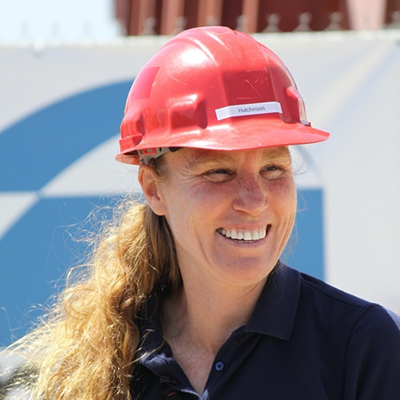
Tara Hutchinson
Tara Hutchinson is a Professor in the Department of Structural Engineering at the University of California, San Diego with broad research interests in geotechnical, structural and earthquake engineering. Much of her work involves full- or large-scale shake table and fixed reaction-type experimentation. She obtained her Ph.D. at the University of California, Davis and M.S. at the University of Michigan, Ann Arbor. She has been on the faculty at UC San Diego since 2007 and presently serves as the Powell Laboratory Director. In 2024 she was appointed the Jan Talbot Endowed Chair in the Jacobs School of Engineering at UC San Diego. Benjamin Schafer, Ph.D., P.E., F. SEI
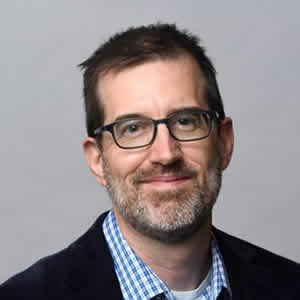
Benjamin Schafer is the Hackerman Professor of Civil and Systems Engineering and the Director of the Ralph O’Connor Sustainable Energy Institute at Johns Hopkins University. He is an active volunteer and leader on multiple national committees related to the engineering and design of steel building structures. He has won multiple awards for his research, teaching, and speaking and currently resides in Washington D.C. with his wife and son.
Click to register |







Free Publications

Latest News
- Updated Tech Note - Field Guide - Inspection Checklist for Structural Cold-Formed Steel Framing
- New Tech Note - Cold-Formed Steel Framing Design: Where Do I Begin?
- Student Intent to Participate on 2026 Competition
- Registration Open - 2026 CFSEI Expo
- Due January 31, 2026 - Entries for 2026 CFSEI Awards Program
Upcoming Events
Thu Feb 12, 2026Webinar on ASCE 7-22's Effect on Non-structural CFS Component Seismic Loads Category: Events |
Tue Oct 6, 202625th Wei-Wen Yu International Specialty Conference on Cold-Formed Steel Structures Category: Events |
View Full Calendar
Announcements
Press Release! • June 16, 2025
CFSEI to Host Webinar on Vibration of Floors with Cold-Formed Steel Framing on June 26, 2025
Press Release! • June 12, 2025
CFSEI Names Larry W. Williams as Recipient of the 2025 John P. Matsen Award for Distinguished Service